
Several key parameters of hydraulic pump and motor
1.displacement V
Displacement is the most important characteristic data of hydraulic pump, which indicates the size of the pump and the amount of oil transported in one rotation. For the plunger type hydraulic pump, the displacement is equal to the stroke volume A*h. For variable pumps and variable motors, the size of the displacement will change.
2.Working pressure
The following concepts need to be distinguished:
- Maximum lasting pressure p1
- Maximum intermittent pressure p2
- Peak pressure p3
For the maximum intermittent pressure p2, it is necessary to indicate whether the load cycle is absoluteor relative.
When the working pressure is close to the peak pressure p3, the operating time should not be too long - the typical length is the response time of the relief valve.
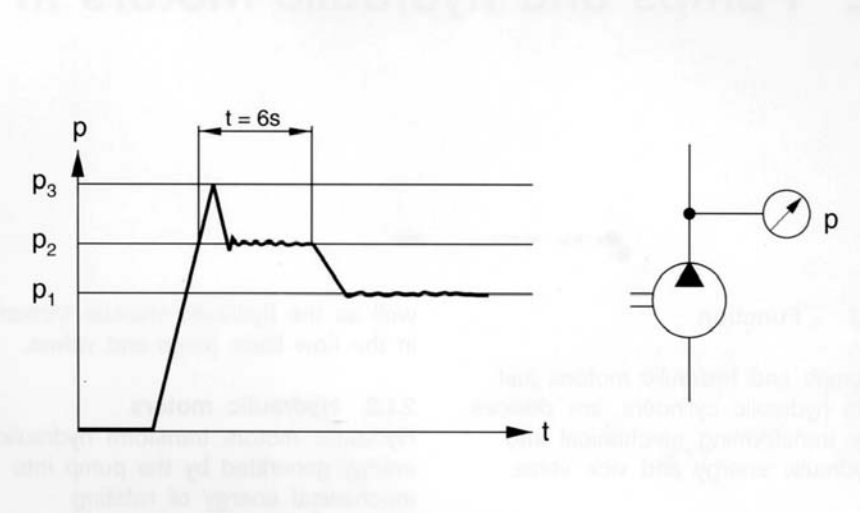
Figure 1 Working pressure
3.Suction line vacuum
When the hydraulic pump is located at a height above the liquid level of the tank, the inlet of the pump will produce a vacuum, which is a problem that must be solved. The size of the vacuum degree depends on the height of the oil absorption and the specific gravity of the oil. The cause of the vacuum, as wellas the throttling loss of the suction line (the installation length of the pipeline, the number of bends in the pipeline, the suction filter, etc.). Vacuum degree is measured by relative vacuum degree and absolute vacuum degree. The recommended minimum value is related to the construction of the hydraulic pump and is about 0.7-0.8bar absolute pressure.
4.Qi pocket
When the pressure of the suction line drops to a certain extent, the cavitation phenomenon will occur. Air pockets can make the operation more noisy and cause damage to the pump. Air pockets are created by air dissolved in the working fluid. In the vacuum, the air will be separated from the oil in the form of bubbles, through the hydraulic pump discharge chamber, at high temperature again dissolved into the hydraulic fluid.
5.Pump/hydraulic motor housing pressure
If the hydraulic pump and hydraulic motor have an oil drain, it is necessary to connect to the tank in accordance with the method of zero pressure of the oil gauge.
The maximum back pressure value is approximately 2bar absolute pressure, or 1bar surface pressure.
6.efficiency
Hydraulic pumps, hydraulic motors and hydraulic cylinders will have a certain amount of energy loss when transmitting energy. These losses also determine efficiency, which needs to be taken into account in the calculation. The overall efficiency is largely determined by the structure of the equipment, manufacturing accuracy, the degree of aging of the equipment and other operating parameters. These parameters should be considered in the actual calculation of hydraulic equipment. Today, several different concepts of efficiency have been defined and used.
Volumetric efficiency ηv, which is related to internal and external leakage of hydraulic pumps and hydraulic motors; Hydraulic mechanical efficiency ηhm, which is related to the large friction loss of hydraulic pump and hydraulic pressure; Total efficiency ηt=ηv*ηhm, refers to the total loss of hydraulic pump and hydraulic motor during power transfer.
The efficiency η is generally graphed and displayed in several different graphs, each representing the relationship between the various operating parameters, as follows:
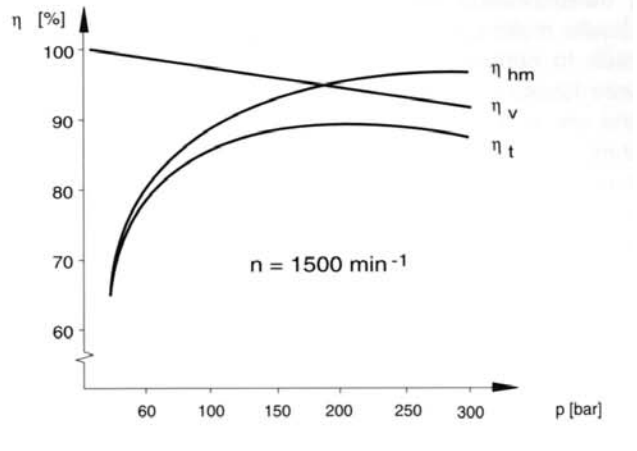
η is related to the pressure p at a fixed speed n
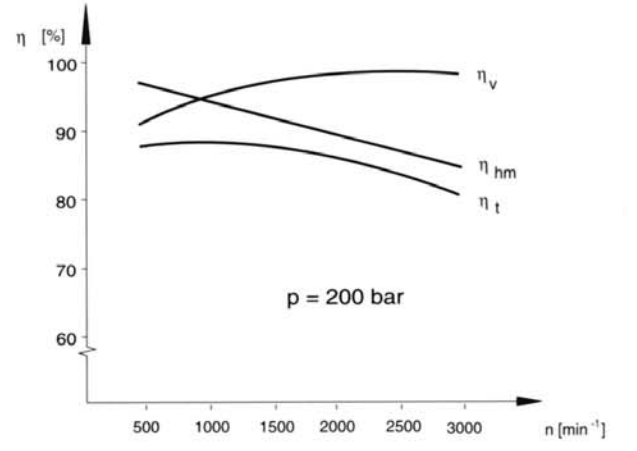
η is related to the speed n at a fixed pressure p
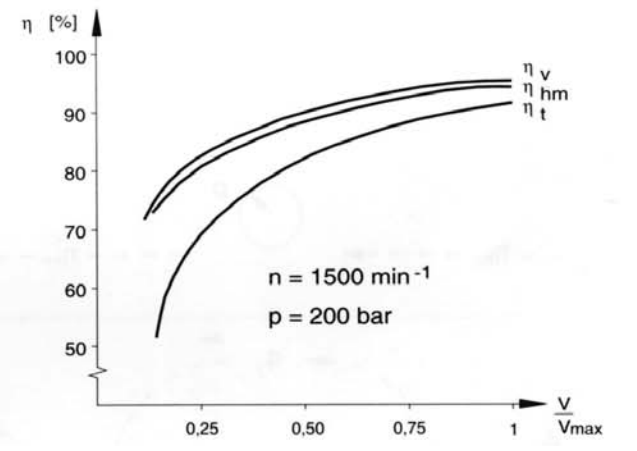
For variable pumps: η is related to the output flow at a fixed pressure p and a fixed speed n
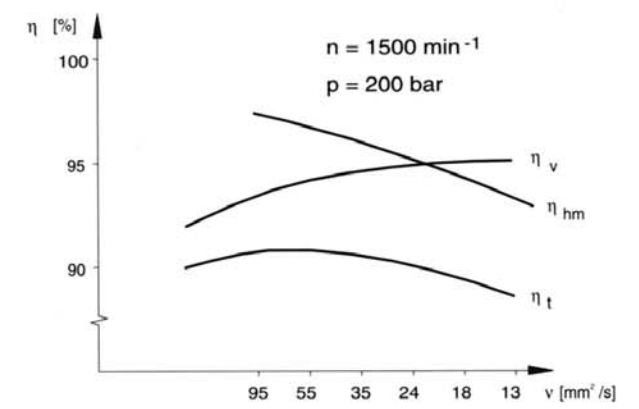
η is related to the viscosity of the fluid at a fixed pressure p and a fixed speed n